
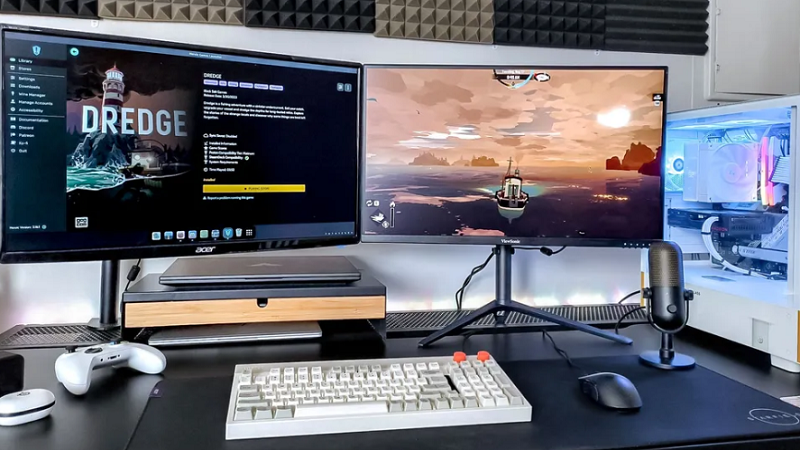
I still remember when telling someone “I game on Linux” got you a confused look, followed by a question about why you’d make life harder for yourself. That conversation doesn’t really happen anymore. Something shifted, quietly, over the last couple of years, and by 2026 it’s become impossible to ignore. Linux gaming isn’t the underdog hobby it used to be; it’s a genuine second option that a growing number of people are actually choosing, not settling for.
So where is all this actually heading? The following trends are expected to have the biggest impact this year.
Steam Deck’s Shadow Is Longer Than Its Sales Numbers Suggest
People talk about the Steam Deck like it’s just a handheld, but its real impact has always been bigger than the hardware itself. Every unit sold is basically a vote that pushes developers to care about Linux compatibility, whether they intended to or not. The Steam Deck had shipped an estimated 5.6 million units by mid-2025, and held roughly 48% of the tracked handheld gaming PC market in 2024. That’s not a niche product anymore. That’s a market-shaping one.
And the ripple effects go well beyond people who actually own a Deck. Desktop Linux distributions now account for over 70% of Linux gaming installations outside of SteamOS itself, which tells you something important: this isn’t just Deck owners occasionally booting into desktop mode. There’s a real, separate wave of people choosing gaming-focused Linux distros on their actual PCs.
Proton Keeps Closing the Gap, Faster Than Expected
If you’d asked me a few years back whether Proton would ever feel “boring” — in the good way, where it just works, and you stop thinking about it — I’d have been skeptical. But that’s roughly where things are heading. Proton 9.0, released in early 2026, now supports over 90% of the top 1000 Steam games with Platinum or Gold ratings, meaning most of what people are actually playing either runs perfectly or close to it.
What’s more interesting is how this is playing out at scale on Steam itself. Steam’s own hardware survey showed Linux climbing to 5.33% in March 2026, crossing the 5% mark for the first time in the platform’s history. It’s a small number in absolute terms, sure, but the trajectory matters more than the snapshot.
Windows 10’s End of Support Is Doing Some of the Recruiting
Here’s the part that people don’t talk about enough: not everyone switching to Linux is doing it because they love open-source software. A lot of it is circumstantial. Microsoft confirmed Windows 10 reached end of support on October 14, 2025, and a huge number of machines simply can’t move cleanly to Windows 11. For people staring down a hardware upgrade they didn’t budget for, Linux has started looking less like an enthusiast project and more like a practical way to keep an aging machine useful.
Anti-Cheat Is Still the Big Unsolved Piece
I’d be doing readers a disservice if I painted this as a fully solved story, because it isn’t. Multiplayer gaming is still where Linux struggles the most. Support for Easy Anti-Cheat and BattlEye has improved noticeably, opening the door to more competitive titles than before, but plenty of major live-service games still just don’t work, and that’s entirely up to the publisher, not Valve. This is worth watching closely in 2026 because it’s genuinely the last major wall left standing. Everything else — drivers, performance, compatibility — has improved dramatically. Anti-cheat adoption is a business decision, not a technical one, and business decisions move slower.
Gaming-Focused Distros Are Having a Moment
A few years ago, most people just used whatever mainstream distro they already had for gaming. That’s changing. Distros built specifically around gaming — think Bazzite, CachyOS, and similar Arch or Fedora-based projects — are picking up real traction because they remove a lot of the setup friction that used to scare people away. Instead of manually chasing drivers and Proton versions, these distros ship with gaming defaults baked in from day one.
Where This Leaves Us
None of this means Linux will overtake Windows in gaming that’s not a realistic view of the current situation. But the direction is unmistakable. Drivers that used to be a weekend project now mostly just work. Compatibility layers that used to feel like a workaround now feel like infrastructure. And the audience isn’t just hobbyists anymore; it includes people who simply want their games to run and don’t particularly care what’s happening under the hood.
If 2026 has a theme for Linux gaming, it’s this: the platform stopped needing an excuse. It just needs to keep doing what it’s already doing.
We cover more of these shifts as they happen over on highlevelblogs.com, if you want to keep tabs on where this goes next. More Information